 3a7832e0d4
- Removed ChartAsync.
- Added the `show_async` method to `Chart`.
- Refactored how the TopBar is used. The docs explain this in detail, but a basic rundown is:
    - `corner_text` and `create_switcher` are no longer methods. The `topbar` attribute of `chart` should be used instead.
    - switchers and textboxes, now created with `chart.topbar.textbox` and `chart.topbar.switcher` require a name to be passed to them, which is used to access its instance (e.g `chart.topbar[‘timeframe’]`)
    - If you have any questions about these changes, or potential enhancements, feel free to raise an issue and I will get back to you ASAP :)

- PtQt and Wx can now use either synchronous or asynchronous callback functions

- BETA: Support for Jupyter Notebooks

- Fixed a bug causing the ‘date’ column of DataFrames passed to `set`, `update`, and `update_from_tick` to be modified.
256 lines
7.3 KiB
Markdown
256 lines
7.3 KiB
Markdown
<div align="center">
|
|
|
|
# lightweight-charts-python
|
|
|
|
[](https://pypi.org/project/lightweight-charts/)
|
|
[](https://python.org "Go to Python homepage")
|
|
[](https://github.com/louisnw01/lightweight-charts-python/blob/main/LICENSE)
|
|
[](https://lightweight-charts-python.readthedocs.io/en/latest/docs.html)
|
|
|
|
|
|
|
|
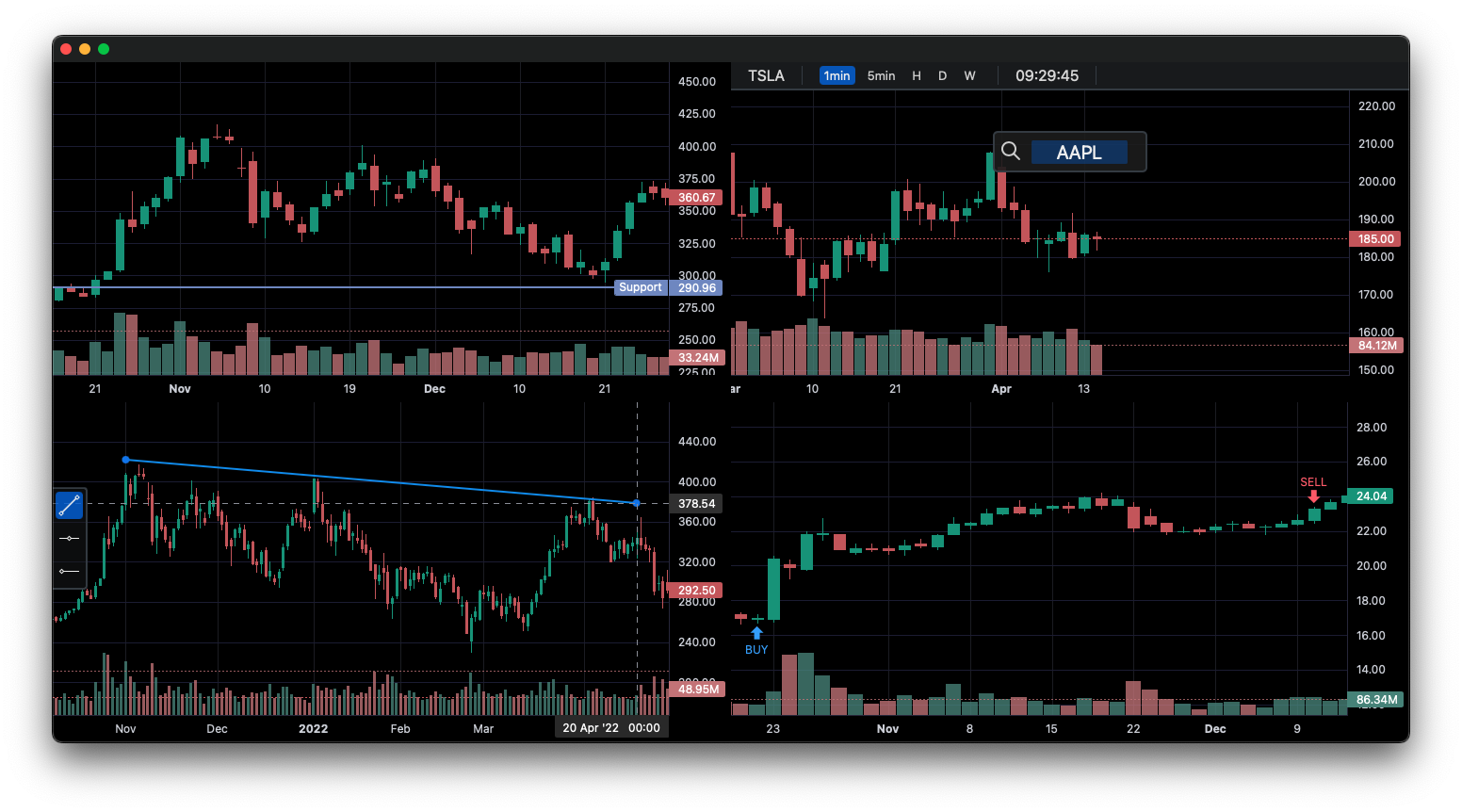
lightweight-charts-python aims to provide a simple and pythonic way to access and implement [TradingView's Lightweight Charts](https://www.tradingview.com/lightweight-charts/).
|
|
</div>
|
|
|
|
|
|
## Installation
|
|
```
|
|
pip install lightweight-charts
|
|
```
|
|
* White screen? Having issues with pywebview? Click [here](https://github.com/louisnw01/lightweight-charts-python/issues?q=label%3A%22pywebview+issue%22+).
|
|
___
|
|
|
|
## Features
|
|
1. Simple and easy to use.
|
|
2. Blocking or non-blocking GUI.
|
|
3. Streamlined for live data, with methods for updating directly from tick data.
|
|
4. Supports:
|
|
* PyQt
|
|
* wxPython
|
|
* Streamlit
|
|
* asyncio
|
|
* Jupyter Notebooks using the [JupyterChart](https://lightweight-charts-python.readthedocs.io/en/latest/docs.html#jupyterchart)
|
|
5. [Callbacks](https://lightweight-charts-python.readthedocs.io/en/latest/docs.html#callbacks) allowing for timeframe (1min, 5min, 30min etc.) selectors, searching, and more.
|
|
6. Multi-Pane Charts using the `SubChart` ([examples](https://lightweight-charts-python.readthedocs.io/en/latest/docs.html#subchart)).
|
|
___
|
|
|
|
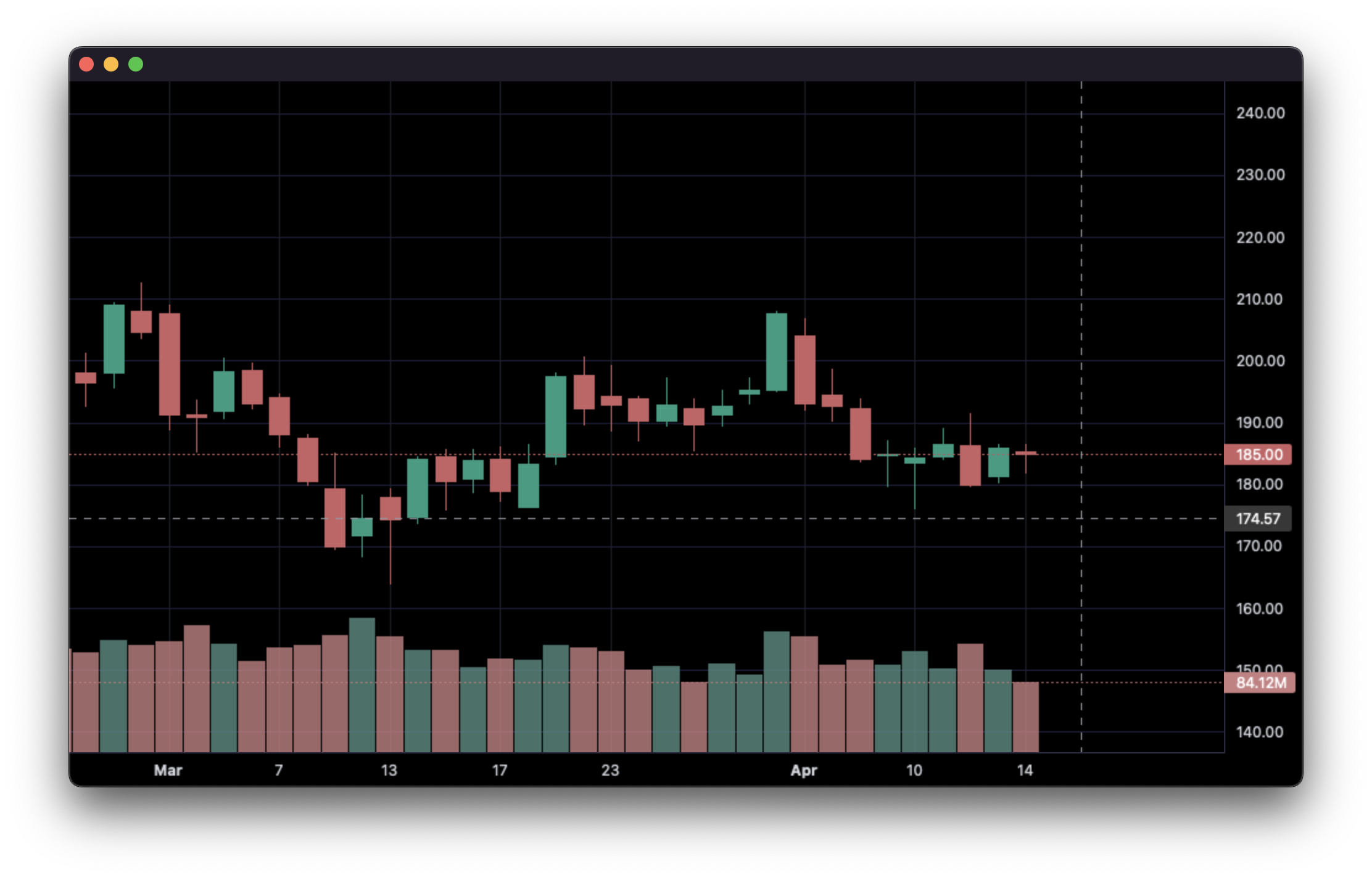
### 1. Display data from a csv:
|
|
|
|
```python
|
|
import pandas as pd
|
|
from lightweight_charts import Chart
|
|
|
|
|
|
if __name__ == '__main__':
|
|
|
|
chart = Chart()
|
|
|
|
# Columns: | time | open | high | low | close | volume (if volume is enabled) |
|
|
df = pd.read_csv('ohlcv.csv')
|
|
chart.set(df)
|
|
|
|
chart.show(block=True)
|
|
|
|
```
|
|
|
|
___
|
|
|
|
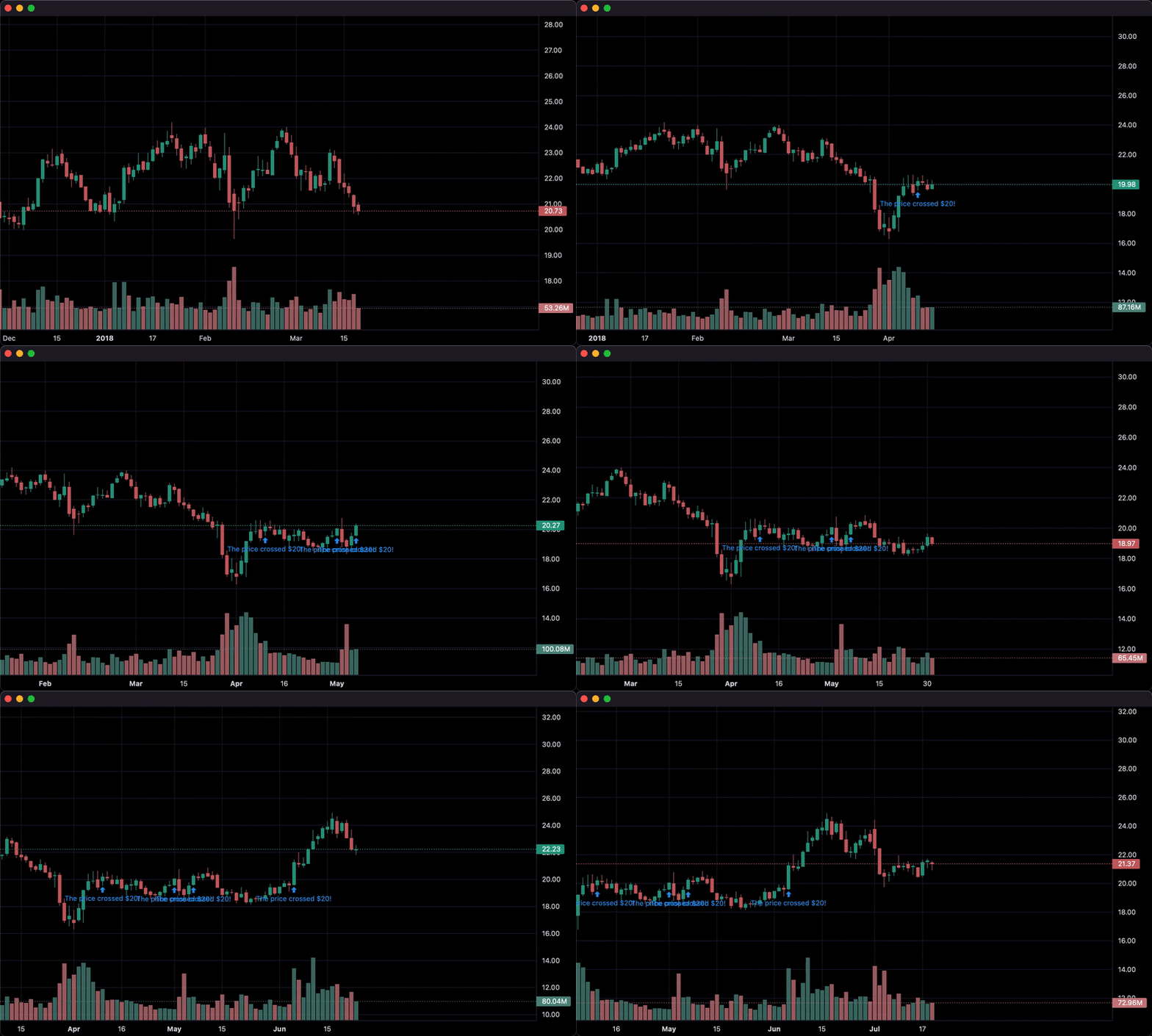
### 2. Updating bars in real-time:
|
|
|
|
```python
|
|
import pandas as pd
|
|
from time import sleep
|
|
from lightweight_charts import Chart
|
|
|
|
if __name__ == '__main__':
|
|
|
|
chart = Chart()
|
|
|
|
df1 = pd.read_csv('ohlcv.csv')
|
|
df2 = pd.read_csv('next_ohlcv.csv')
|
|
|
|
chart.set(df1)
|
|
|
|
chart.show()
|
|
|
|
last_close = df1.iloc[-1]
|
|
|
|
for i, series in df2.iterrows():
|
|
chart.update(series)
|
|
|
|
if series['close'] > 20 and last_close < 20:
|
|
chart.marker(text='The price crossed $20!')
|
|
|
|
last_close = series['close']
|
|
sleep(0.1)
|
|
|
|
```
|
|
|
|
|
|
___
|
|
|
|
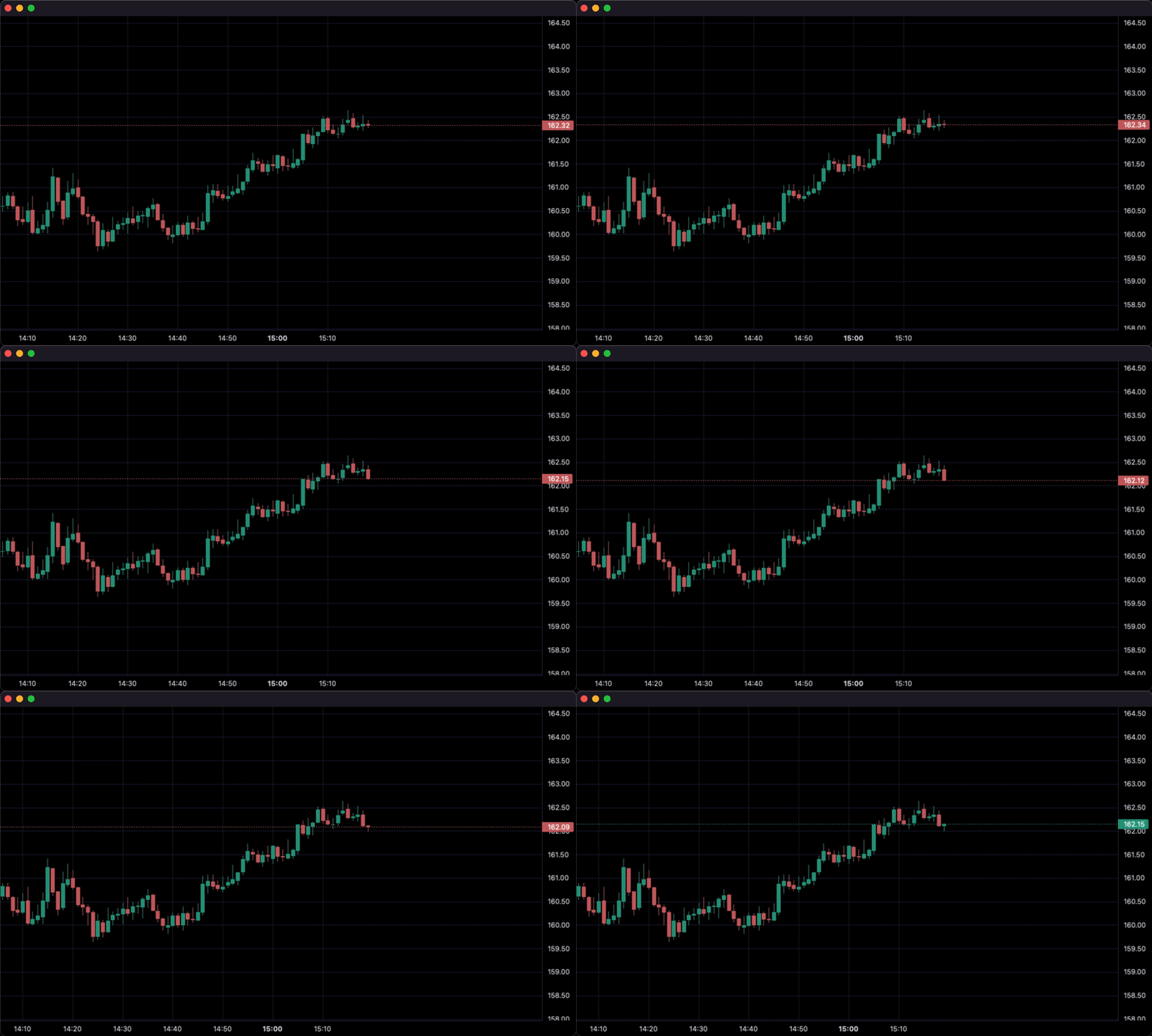
### 3. Updating bars from tick data in real-time:
|
|
|
|
```python
|
|
import pandas as pd
|
|
from time import sleep
|
|
from lightweight_charts import Chart
|
|
|
|
|
|
if __name__ == '__main__':
|
|
|
|
df1 = pd.read_csv('ohlc.csv')
|
|
|
|
# Columns: | time | price | volume (if volume is enabled) |
|
|
df2 = pd.read_csv('ticks.csv')
|
|
|
|
chart = Chart(volume_enabled=False)
|
|
|
|
chart.set(df1)
|
|
|
|
chart.show()
|
|
|
|
for i, tick in df2.iterrows():
|
|
chart.update_from_tick(tick)
|
|
|
|
sleep(0.3)
|
|
|
|
```
|
|
|
|
___
|
|
|
|
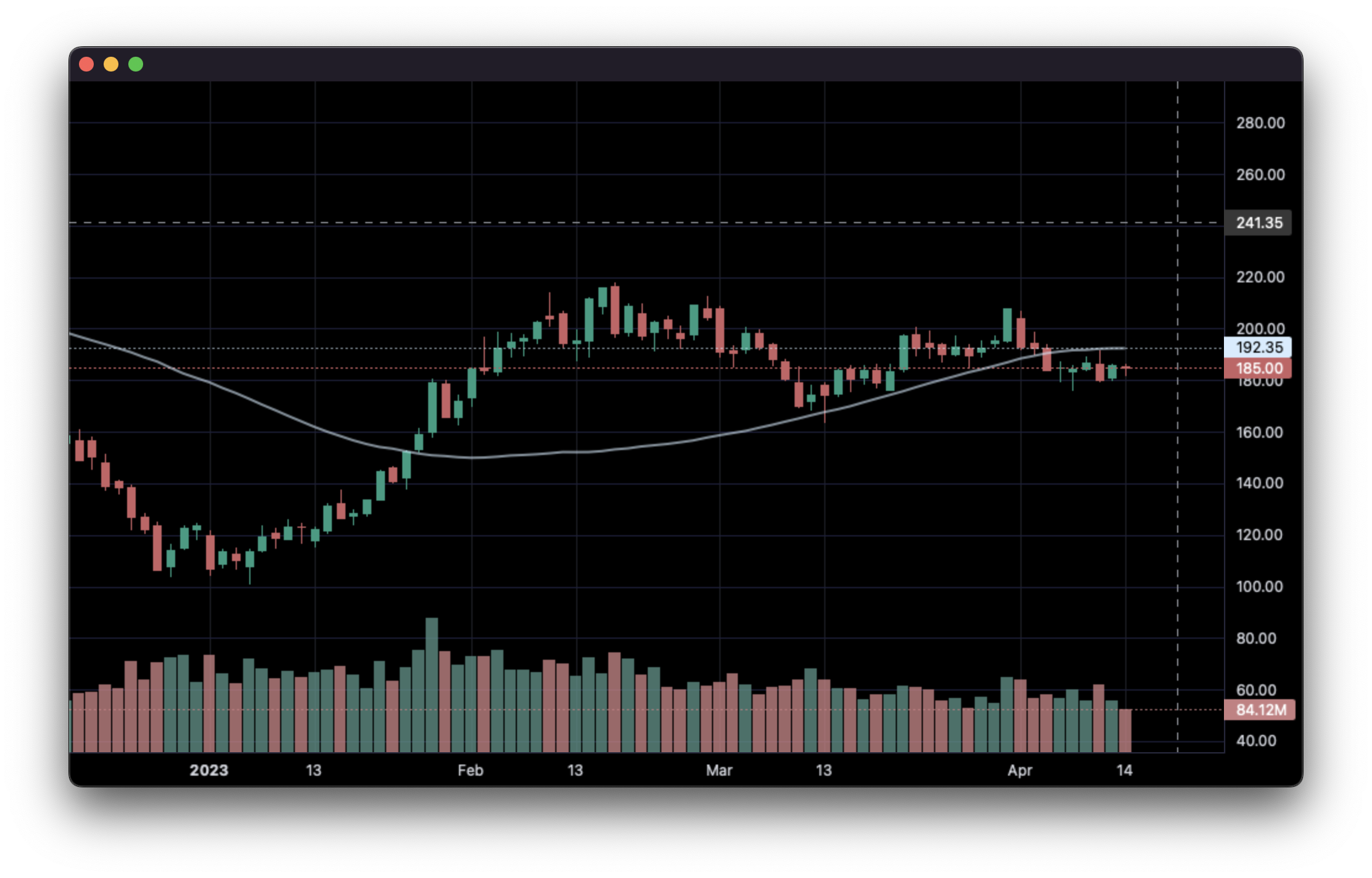
### 4. Line Indicators:
|
|
|
|
```python
|
|
import pandas as pd
|
|
from lightweight_charts import Chart
|
|
|
|
|
|
def calculate_sma(data: pd.DataFrame, period: int = 50):
|
|
def avg(d: pd.DataFrame):
|
|
return d['close'].mean()
|
|
|
|
result = []
|
|
for i in range(period - 1, len(data)):
|
|
val = avg(data.iloc[i - period + 1:i])
|
|
result.append({'time': data.iloc[i]['date'], 'value': val})
|
|
return pd.DataFrame(result)
|
|
|
|
|
|
if __name__ == '__main__':
|
|
chart = Chart()
|
|
|
|
df = pd.read_csv('ohlcv.csv')
|
|
chart.set(df)
|
|
|
|
line = chart.create_line()
|
|
sma_data = calculate_sma(df)
|
|
line._set(sma_data)
|
|
|
|
chart.show(block=True)
|
|
|
|
```
|
|
|
|
___
|
|
|
|
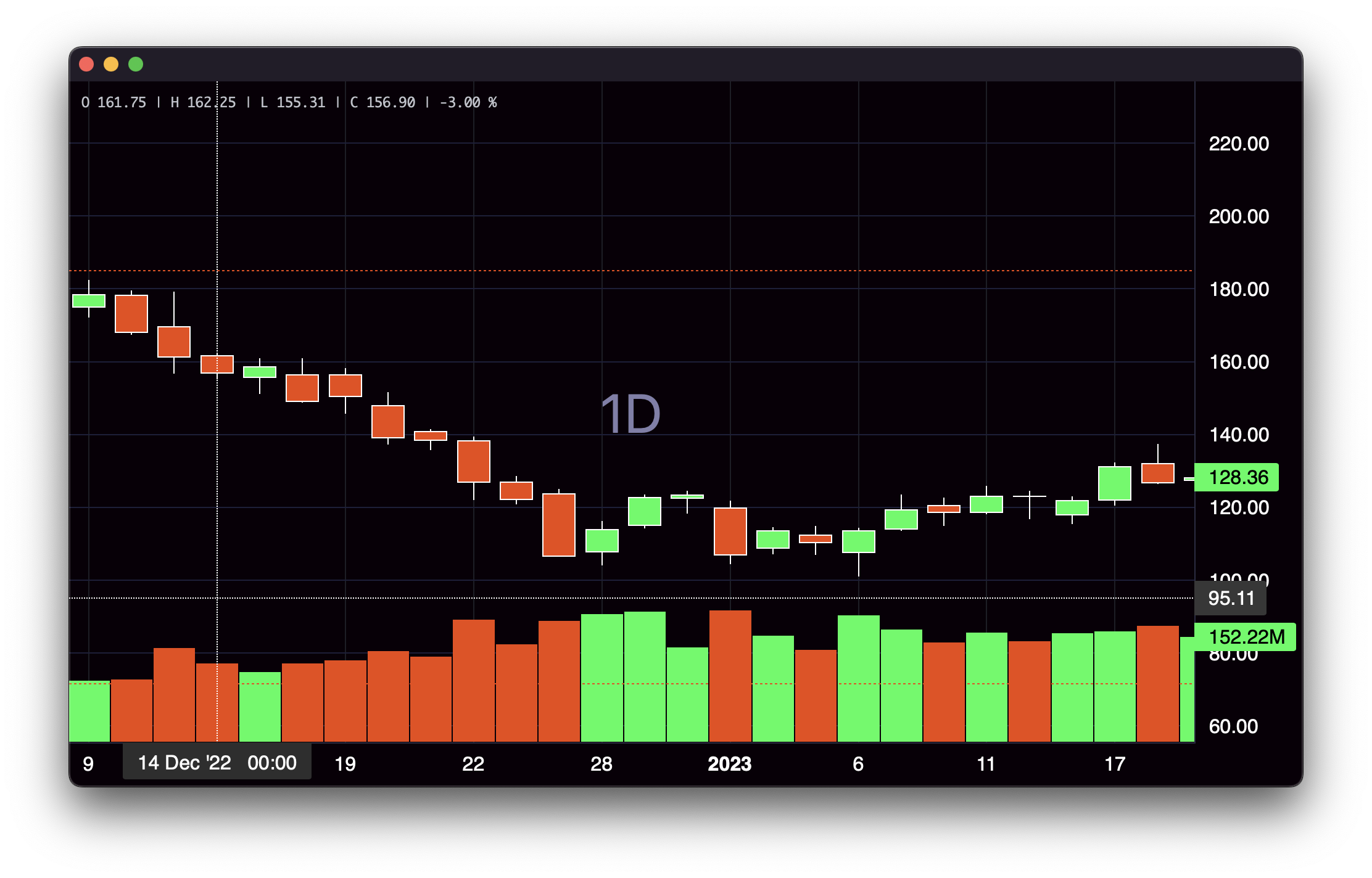
### 5. Styling:
|
|
|
|
```python
|
|
import pandas as pd
|
|
from lightweight_charts import Chart
|
|
|
|
|
|
if __name__ == '__main__':
|
|
|
|
chart = Chart(debug=True)
|
|
|
|
df = pd.read_csv('ohlcv.csv')
|
|
|
|
chart.layout(background_color='#090008', text_color='#FFFFFF', font_size=16,
|
|
font_family='Helvetica')
|
|
|
|
chart.candle_style(up_color='#00ff55', down_color='#ed4807',
|
|
border_up_color='#FFFFFF', border_down_color='#FFFFFF',
|
|
wick_up_color='#FFFFFF', wick_down_color='#FFFFFF')
|
|
|
|
chart.volume_config(up_color='#00ff55', down_color='#ed4807')
|
|
|
|
chart.watermark('1D', color='rgba(180, 180, 240, 0.7)')
|
|
|
|
chart.crosshair(mode='normal', vert_color='#FFFFFF', vert_style='dotted',
|
|
horz_color='#FFFFFF', horz_style='dotted')
|
|
|
|
chart.legend(visible=True, font_size=14)
|
|
|
|
chart.set(df)
|
|
|
|
chart.show(block=True)
|
|
|
|
```
|
|
|
|
___
|
|
|
|
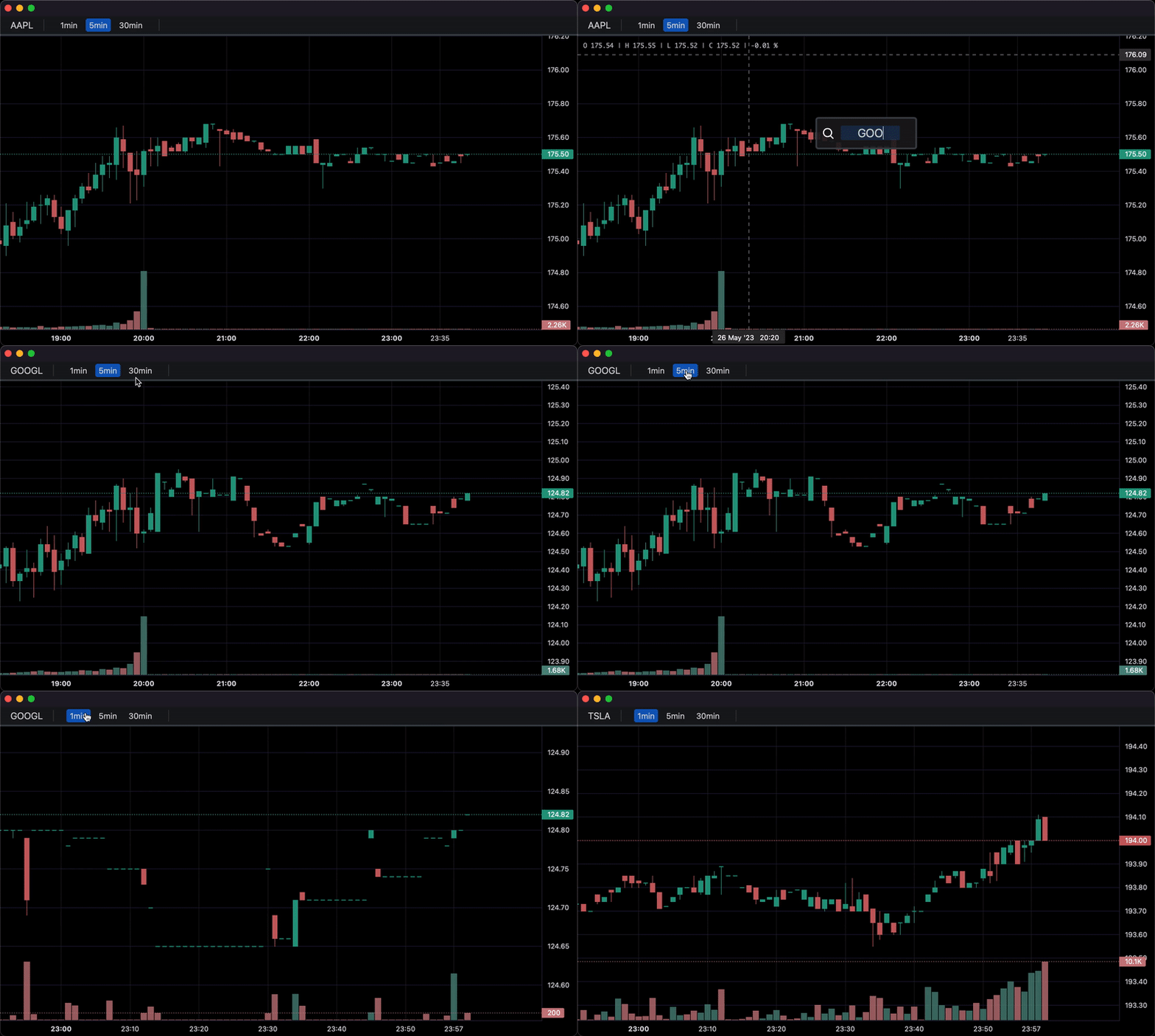
### 6. Callbacks:
|
|
|
|
```python
|
|
import asyncio
|
|
import pandas as pd
|
|
|
|
from lightweight_charts import Chart
|
|
|
|
|
|
def get_bar_data(symbol, timeframe):
|
|
if symbol not in ('AAPL', 'GOOGL', 'TSLA'):
|
|
print(f'No data for "{symbol}"')
|
|
return pd.DataFrame()
|
|
return pd.read_csv(f'bar_data/{symbol}_{timeframe}.csv')
|
|
|
|
|
|
class API:
|
|
def __init__(self):
|
|
self.chart = None # Changes after each callback.
|
|
|
|
async def on_search(self, searched_string): # Called when the user searches.
|
|
new_data = get_bar_data(searched_string, self.chart.topbar['timeframe'].value)
|
|
if new_data.empty:
|
|
return
|
|
self.chart.topbar['corner'].set(searched_string)
|
|
self.chart.set(new_data)
|
|
|
|
async def on_timeframe_selection(self): # Called when the user changes the timeframe.
|
|
new_data = get_bar_data(self.chart.topbar['corner'].value, self.chart.topbar['timeframe'].value)
|
|
if new_data.empty:
|
|
return
|
|
self.chart.set(new_data)
|
|
|
|
|
|
async def main():
|
|
api = API()
|
|
|
|
chart = Chart(api=api, topbar=True, searchbox=True)
|
|
chart.legend(True)
|
|
|
|
chart.topbar.textbox('corner', 'TSLA')
|
|
chart.topbar.switcher('timeframe', api.on_timeframe_selection, '1min', '5min', '30min', default='5min')
|
|
|
|
df = get_bar_data('TSLA', '5min')
|
|
chart.set(df)
|
|
|
|
await chart.show_async(block=True)
|
|
|
|
|
|
if __name__ == '__main__':
|
|
asyncio.run(main())
|
|
|
|
```
|
|
|
|
___
|
|
|
|
<div align="center">
|
|
|
|
[](https://lightweight-charts-python.readthedocs.io/en/latest/docs.html)
|
|
___
|
|
|
|
_This package is an independent creation and has not been endorsed, sponsored, or approved by TradingView. The author of this package does not have any official relationship with TradingView, and the package does not represent the views or opinions of TradingView._
|
|
</div>
|